Hi all, no, I'm not dead but am just back from nearly 40 days in Oz and New Zealand where I was birding (that's a suprise, isn't it?) and also seeing old university friends in Brisbane, also birders. Now that body and brain have become at one with each other after the 21 hour flight from Brisbane, I have found myself with 500+ e-mails to sort and, where necessary, reply to. So, my thanks to those who enquired if I was alright and wondered it I had fallen off the planet.
Just to give you an idea,, I have this morning downloaded nearly 2.500 photos which now have to be sorted. I saw (if my sums are correct) 168 species of which 148 were new in Oz, and in NZ (again with the same caveat) 153 spp. with 99 new ones, some of these already having been new in Oz.
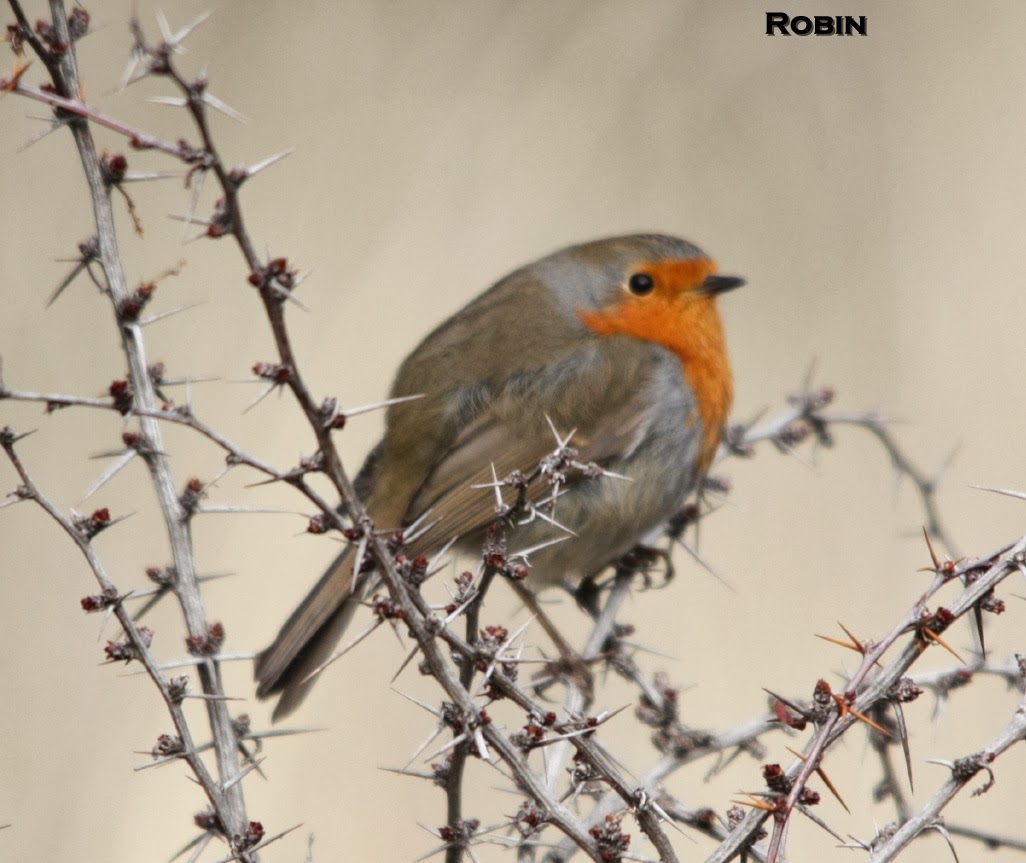
. All this stuff will, if there is a demand, appear in later instalments in this column. Meanwhile, I attach a photo of what I consider the best bird of the trip and what it is you will have to work out for yourselves. The name of the first correct reply will be forced to buy the drinks.
NOTE: Would Mark White and any others who have had similar ideas in the past please by introducing them as 'comments' notes that I will
not put in any business advertising unless I have tried the product myself (i.e.. anything relating to birding) and think that it may be of interest to my readers, of which there are far more than I thought! Thank you all, dear things.
Thanks to
Nick Ransdale of
Moulismes Nature and his web page
www.nick-ransdale.com It is in both English and French, the brushingup of the latter won't hurt any (even if they did beat us in the Six Nations - quelle grande merde!). Glad that you've found the first book of 1987 helpful, Nick, and there is no refund on a book going on for nearly 30 years old!
So, now to all the stuff Dave has sent from Almería whilst I have been away and which I hope will all get put in as a compendium (don't know what it means but it sounds good). This is unedited work and many thanks, Dave & Gilly and all the Arboleas folks. By the by, the record of the
Brent Goose is a jolly good one and off.hand I can't think of any others this far south, akthough there are odd ones from Huelva, I believe.
21 January :
Rambla de Almanzora & Vera.
I travelled
on my own to the Rambla de Almanzora as Gilly had a Christmas Lunch to go
to.....yeah, don't go there! There, above the "ford", I met up with
13 other members and two guests of Les & Lynn's, Eileen &
Dolores...see, I did remember your names! It was good to see returning
holidaymakers Phil & Sue again. Checking on the birds in the pools
opposite, we saw Black-winged Stilt, Mallard, Shoveler, Teal, Green Sandpiper,
Ringed Plover & Little Stint. Also seen were Black Headed Gull, White
Wagtail, Moorhen, Chiffchaff & Crested Lark. We then walked up towards the
desalination plant. Brian spotted the first Snipe of the day. A Southern Grey
Shrike showed well on the power line crossing the rambla whilst a Kestrel
perched in a similar position but further away. I spotted a Meadow Pipit and a
Grey Wagtail was also seen. Lagging behind, Phil was lucky enough to spot his
first ever Bluethroat, but it disappear into the shrubbery never to be seen
again. Near to the weir I added a Water Pipit & Les spotted a Dunlin with a
pair of Little Stint.
After our
usual coffee break in Villaricos village we headed for the beach. On the
harbour rocks were a couple of Audouin's Gulls, Cormorants, a Yellow Legged
Gull, a Grey Heron and later a Little Egret.
 |
Dunlin
|
The rocks
closer to us eventually revealed a Kentish Plover & a Turnstone. Out to sea
at least 4 Black Necked Grebes were seen. We then walked over to the estuary.
More Grey Herons were seen. Also Coot, Little Grebe and distant but good views
of at least two Kingfishers. A female Marsh Harrier came over, putting the
flock of Black Headed Gulls to flight. A Sanderling was also seen. The walk
back to the vehicles along the beach added Grey Plover, Sandwich Tern, Lesser
Black Backed Gull and a well spotted Mediterranean Gull sitting out to sea by
sharp eyed Les.
We
then convoyed to the dual carriageway above the pools at Vera. We saw more Teal
and at least two female Red Crested Pochard. In the pool opposite the Consum
supermarket we added Common Pochard & White Headed Duck. A Cetti's Warbler
was heard. The star was an Adult Booted Eagle soaring above us. A large number
of Crag Martins were feeding over the reeds & water. We met up with Colin
Harrison, who lives nearby. Interested in birds, especially photography, so
hopefully he'll join us on our trips.
Ended up
with 51 species for the day. Good to be back on my local patch. On a personal
note, had to take Gilly to A&E last Thursday. Her heart kept missing a
beat. She's been put on beta-blockers and has an appointment with the
cardiologist in February....which reminds me... I had my annual heart check up
in an Almeria hhospital yesterday...all ok....but on the way down the E15,
between the prison & Almeria Airport, 8am, Eagle Owl flew across in front
of us. Cardiologist wondered why my blood pressure was slightly up....that
could explain it!
26 January : Las Norias & Roquetas
Poor Gilly had to do a 12 hour
shift with a man suffering from dementia in Mojacar which meant that after I'd
dropped her off I was a free agent. With all the gear, including my repaired
lens back from the land of the rising sun, I headed for Las Norias. It being a
Sunday there were numerous illiterate locals fishing unable to read the
"NO Fishing" signs. At the first causeway, on the lake to the left,
there were some Coot, Great Crested & Black Necked Grebes, but the most
numerous birds were two small rafts of Red Crested Pochard. There had been a
change in the weather. Full sun and no wind, so the lakes were like mill ponds.
A Sardinian Warbler sang from a nearby shrub as I scanned the reed edges. Along
the left hand edge near the pumping station stood a Purple
Swamphen. I checked round the other side of the building seeing the first of
many Chiffchaffs and White Wagtails of the day. I walked back to near the car
when a couple, who were obviously birdwatchers, had parked up. I fixed my scope
onto the still visible Purple Swamphen and beckoned them over to have a look.
His name was Juan and hers, Olivia. Both were from Granada University. He was
studying Great Spotted Cuckoos. They'd satellite tagged 5 individuals
at Guadix, but unfortunately only one was
still broadcasting its location. Olivia was studying Ants, a phobia
of Gilly's after her father decided it would be fun to poke a stick into a Bull
Ant nest in Australia & Gilly got bitten! Luckily for me
Juan spoke reasonable English. A distant flight of 8 Night Heron was seen. On
the right hand side lake we only saw Shoveler to add to the day list.
 |
| Southern Grey Shrike |
We moved round to the Old
Heronry spot, but nothing of further interest was seen. As we reached the
second causeway a load boom sent lots of birds to flight. Not good for them,
but after each boom we had a fly past. Common Pochard, Shoveler, Red-cCrested
Pochard & Mallard. A Marsh Harrier was seen over the reeds next to the
Plastic Recycling Factory. The next minute, looking the other way, I spotted a
Peregrine Falcon coming our way. It suddenly put its wings back into the stoop
position and shot down. Its target was the harrier! The harrier saw it coming
and at the final second it turned virtually upside down presenting claws
up. They put the Peregrine off and it aborted the attack. Amazing
sight! A flight of 8 waders were seen & I'm pretty sure they were Knot. A
Great White Egret also flew past. A Northern Starling was also seen. As we were
saying our goodbyes we were joined by some English birders, Matthew, Liz and (I
apologise) a man whose name now escapes me. There were on holiday in Mojacar
till next Saturday so hopefully they'll be joining us at Cabo de Gata on
Wednesday-
On my own again I headed for
Roquetas. On the main lake there were shed-loads of Shoveler with the numerous
Black Headed & Lesser Black Backed Gulls. The nice surprise was seeing two
small groups of Wigeon. I then drove to the small pond
where families were feeding bread to Mallard, Coot, gulls and a
single male White Headed Ducks, Yet again, no sign of the Red Knobbed Coot.
Have they been moved? As I was leaving a flight of
4 Mediterranean Gulls flew over. I carried on towards the salinas. On
the way some waders were feeding close to the track. Dunlin, Kentish Plover
& Little Stint.
The water
level was quite high. Greater Flamingos were numerous. At the
"good" wader spot the water was too deep for them. On an island there
were 14 Grey Plover & a Redshank. Over the far side, amongst the resting
Flamingos was a snuggle of 21 Spoonbill. I added Stonechat & Greenfinch on
the way back. 44 species for the day. Some cracking birds & sights made it
a great day.....and the lens appears to be working well. Having previously
replaced the auto focus motor, they have now replaced the complete body apart
from the glass and the ring with the serial number on it!
29 January :
Cabo de Gata & Rambla Morales
The weather
forecast on the TV was predicting rain coming in from the west as 16 of us
hardy birdwatchers drank coffee in Pujaire before heading for the first hide on
the Cabo de Gata nature reserve. We already had 6 species in the bag, the most
notable being a Southern Grey Shrike spotted by Phil. It was cloudy & a bit
windy. There were at least 3 large rafts of Black Necked Grebes to be seen, each
containing between 40-50 birds. To the left in the more sheltered bay was a
small group of Black Tailed Godwit and a Redshank. Paul later spotted a
Greenshank there as well. On the narrow rocky causeway numerous birds were
hunkered down sheltering from the wind. An Audouin's Gull, Dunlin, Grey Plover,
Kentish & Ringed Plover, a pair of Avocet and some more Godwit, one of
which Gilly noted was different and was identified as a Bar Tailed. Checking
the water edges I came across a single Spoonbill near some Little Egret. On the
wildfowl front we saw Shelduck & Mallard, then Kevin spotted a single Brent Goose, a remarkable find so far
south!
 |
| Brent Goose |
We then
drove to the second hide, parking up adjacent to the beach. Considerably
windier here with good sized waves crashing on to the beach. We disturbed a
group of maybe 25 Eurasian Curlew on the savannah. I noted at least one
Whimbrel amongst them as they landed on the beach. Out to sea a couple of
Gannet were seen as were small flypasts of Balearic Shearwaters.. Lesser Black
Backed Gulls patrolled up & down.
I was hoping
the Brent Goose was still close to
the hide, but it had moved away so was only able to get a "record"
shot. A Slender Billed Gull was swimming in the ditch to our right. On the
scrubland there was very little to be seen, just Sardinian Warbler, House
Sparrow, Serin & Stonechat. Gilly counted 290 Greater Flamingos.
We moved on
to the public hide. Colin spotted some Linnet. More Serin were seen and a
Thekla Lark. Nothing new was added to the list from the hide. As we left some
Greenfinch flew over. We headed for Cabo de Gata village for a coffee, noting
Sanderling and a passing Cormorant.
Wind
increasing now as we drove along the beach track towards the Rambla de Morales.
As we parked a low flying Greater Flamingo struggled against the wind. At the
beach end of the brackish lake, numerous Sanderling were feeding together with
a few Kentish Plovers. Above the reeds we saw Crag Martins. We added White
Headed Duck to the day list. As Gilly was feeling increasingly unwell with an
overnight hacking cough I decided enough was enough and left. I suspect the
others followed shortly afterwards. We returned via the campsite route adding
Common Pochard & Shoveler on the water & a pair of Cattle Egret near
the visitors centre.
44 species for the day, the bright star being the Brent Goose. The weather god was also kind considering the
forecast.
31 January :
Sierra de María
 Since Matthew & Paul were only going to be holidaying for a
short time I offered to take them to the Sierra de Maria on their last full
day. We met up near Huercal Overa & I drove them to Maria. The weather
forecast was clear & sunny.....wrong! It was overcast with some wind. The
higher slopes had a sprinkling of snow on them. After a warming cuppa at the
garage cafe we headed towards the plains to do a bit of in car birding till the
weather warmed up. We first stopped at the old farm buildings and both Matthew
& Paul were delighted to see their first Crossbills, closely followed by
Cirl Buntings. We carried on to the trough & water deposit. Here a few Corn
Bunting were seen with the many Rock Sparrow & Goldfinch. Also seen was a
Linnet. Saw huge flock of 100+ Chaffinch feeding on field. Driving further we
saw a Carrion Crow and the first of about 6 Calandra Lark. I spotted a Little
Owl on rocks. At the hamlet we only added Crested Lark & a female Black
Redstart.
Since Matthew & Paul were only going to be holidaying for a
short time I offered to take them to the Sierra de Maria on their last full
day. We met up near Huercal Overa & I drove them to Maria. The weather
forecast was clear & sunny.....wrong! It was overcast with some wind. The
higher slopes had a sprinkling of snow on them. After a warming cuppa at the
garage cafe we headed towards the plains to do a bit of in car birding till the
weather warmed up. We first stopped at the old farm buildings and both Matthew
& Paul were delighted to see their first Crossbills, closely followed by
Cirl Buntings. We carried on to the trough & water deposit. Here a few Corn
Bunting were seen with the many Rock Sparrow & Goldfinch. Also seen was a
Linnet. Saw huge flock of 100+ Chaffinch feeding on field. Driving further we
saw a Carrion Crow and the first of about 6 Calandra Lark. I spotted a Little
Owl on rocks. At the hamlet we only added Crested Lark & a female Black
Redstart.
On the way back we stopped off at the La Piza cafe, watching the
bird feeder whilst drinking coffee. Great, Blue, Coal & Crested Tits
entertained us. A small number of Crossbill were high in the trees.
 It was then up to the chapel. Still quite chilly so not much
around, just a few Serin. The sun was at last warming things up. We had great
views of passing Griffon Vultures. We only added Mistle Thrush, Blackbird &
an obliging Robin to the list.
It was then up to the chapel. Still quite chilly so not much
around, just a few Serin. The sun was at last warming things up. We had great
views of passing Griffon Vultures. We only added Mistle Thrush, Blackbird &
an obliging Robin to the list.
Back to La Piza for lunch.., this time the Tits were joined by
some Jays. We then went to check out the Vulture feeding station near Velez
Blanco. As we approached the was a large flock of feeding Jackdaws & Red
Billed Chough on the ploughed fields. In the feeding compound there were about
10 Griffons. In all we saw at least another 50 odd in various flights around
us.
A good days birding. Paul & Matthew saw at least 6 firsts. 28 species total.
5 February :
Embalse de Negratín
 As Gilly
& I drove up towards Baza in gusty winds, we could see dark clouds &
rainbows, so birdwatching today was always going to be a challenge. We met up
with Trevor, Ann, Josie and a Brianless Mary at the cafe before the
Negratin dam for a coffee & tostada. Our first stop was the car
park by the dam. A Sardinian Warbler was calling from the depths of a
nearby shrub. A small flock of Crossbill flew overhead, one female eventually
perched atop of a pencil cyprus. We wandered along the top of the dam and
managed to spot two Cormorants and a Yellow Legged Gull.
A buffeting wind made us skedaddle back to the
vehicles.
As Gilly
& I drove up towards Baza in gusty winds, we could see dark clouds &
rainbows, so birdwatching today was always going to be a challenge. We met up
with Trevor, Ann, Josie and a Brianless Mary at the cafe before the
Negratin dam for a coffee & tostada. Our first stop was the car
park by the dam. A Sardinian Warbler was calling from the depths of a
nearby shrub. A small flock of Crossbill flew overhead, one female eventually
perched atop of a pencil cyprus. We wandered along the top of the dam and
managed to spot two Cormorants and a Yellow Legged Gull.
A buffeting wind made us skedaddle back to the
vehicles.
It was much
calmer & warmer in the valley below the dam. A flock of Woodpigeon was
seen. We heard then saw a Great Spotted Woodpecker in the leafless trees. Also
seen were Chaffinch, Great Tit, Blackcap & Blackbird. Gilly spotted a
Southern Grey Shrike, closely followed by a male Blue Rock Thrush. Below the
dam itself, above the outlet pool, Crag Martin were feeding and Rock Dove were
squatting on cliff ledges. I spotted a Chiffchaff catching midges above the
reeds. Gilly eventually spotted some red colour on silhouetted thrushes
that flew over above us confirming their Redwing identity. It was then back to
the cars in slight drizzle. En route back to the cafe Gilly & I added Jay,
Raven and a Kestrel to the list.
We ended up with 25 species for the day. I should add that Brian
was unable to attend as he was waiting for the heating oil man to visit.
Phil & Sue managed to capture on camera our first reported
Great Spotted Cuckoo of the year near Los Gallardos last week. (Can't download it!) Regards, Dave
12 February :
Villaricos & Vera
At last the
wind had died down and the sun was shining as Gilly & I met up with 18
other Arboleas Group members above the Rambla de Almanzora near Villaricos. We
were glad to see Dave, Myrtle, Charlie & Val back after varying lengths
away. We also welcomed Colin from the Vera Camera Club.
 |
| immature Cormorant |
After a
quick reminder regarding noise levels as there were so many of us, we started
off by scanning the pools below us. All the usual suspects were there, Mallard,
Black Winged Stilt, Teal, White Wagtail and Moorhen. As we carried on up
further we added Snipe, Green & Common Sandpiper, Water & Meadow Pipit
and Grey Wagtail. In the shrubs were numerous Chiffchaff plus Stonechat, Black
Redstart, Serin, Goldfinch, Sardinian Warbler and a calling Cetti's Warbler.
Further waders seen included Ringed & Kentish Plover, Little Stint, Dunlin
and a Redshank that John spotted. I also
spotted Southern Grey Shrike & a distant Kestrel.
After a refreshing cuppa in Villaricos we headed down to the beach
where numerous camper vans were parked up. On the harbour rocks were a number of
Cormorant, together with an Audouin's and Black Headed Gull. A Turnstone was
seen flying off. A Gannet was seen far out to sea. Nothing else of note was out
to sea. No Black Necked Grebes or Red Breasted Mergansers that Les Senior had
reported seeing at Garrucha previously in the week. We walked over to
the estuary where we saw Grey Heron, Little Grebe, Coot, Little
Ringed Plover and Little Egret.
 |
| Kingfisher |
Phil was the first to spot the Great White
Egret which showed well. A pair of Kingfishers was seen, albeit they were each
end of the estuary! Feeding up & down the water were Sandwich Tern which
were being harassed by both Black-headed & Mediterranean Gulls
if they scored a fishy meal. On the shoreline were more Sandwich Terns,
Audouin's Gulls & Cormorant, 62 according to Brian. A Grey Plover & a
Whimbrel were also seen.
We then made our way down to Vera after assisting Val with her
vehicle after the spare wheel dropped down after going over a small gully.
There were hundreds of Black Headed Gull, but only a very small number of Crag
Martins. The pool opposite Consum was virtually deserted apart from Grey Heron
and a few duck. Most of the White Headed Duck & Common Pochard were in the
pool nearer to Villaricos. As Gilly & I headed for lunch we saw a
Marsh Harrier over the reeds nearer Garrucha.
We finished
with 51 species for the day. A great days birding with great weather for a
change!
19 February :
Las Norias & Roquetas
 As Gilly
& I left Arboleas early this morning the weather was dull & cloudy, but
by the time we got down beyond Roquetas the sun was out and there was a slight
breeze. We met up with Colin, Sandra, Rod, Linda, John & Charlie at a
motorway cafe before making our way to Plastic Greenhouse land at Las Norias.
The water in the lake to the left of the first causeway was as flat as a tack
so swimming birds were easy to spot. There were loads of Cormorant with smaller
numbers of Great Crested & Black Necked Grebe, all at a distance. Grey
Herons were seen before Colin spotted, not one, but two Great White Egrets down
the far end. We had a flypast of half a dozen Red Crested Pochard. We also saw
Common Pochard, Shoveler & Mallard. Yet again Colin came up trumps with a
distant Purple Swamphen. Above us there were a fair number of Crag Martin. As
the others continued to check out the lake I wandered round the other side of
the pump house. I was rewarded with a brief view of a Bluethroat before it
disappeared into the reeds. There was also a Magpie, Chiffchaffs &
Stonechat in the area. The Bluethroat failed to appear for the group, but a
Barn Swallow did. A pair of Common Sandpiper was seen & a Gadwall &
Little Grebe were observed on the right hand lake.
As Gilly
& I left Arboleas early this morning the weather was dull & cloudy, but
by the time we got down beyond Roquetas the sun was out and there was a slight
breeze. We met up with Colin, Sandra, Rod, Linda, John & Charlie at a
motorway cafe before making our way to Plastic Greenhouse land at Las Norias.
The water in the lake to the left of the first causeway was as flat as a tack
so swimming birds were easy to spot. There were loads of Cormorant with smaller
numbers of Great Crested & Black Necked Grebe, all at a distance. Grey
Herons were seen before Colin spotted, not one, but two Great White Egrets down
the far end. We had a flypast of half a dozen Red Crested Pochard. We also saw
Common Pochard, Shoveler & Mallard. Yet again Colin came up trumps with a
distant Purple Swamphen. Above us there were a fair number of Crag Martin. As
the others continued to check out the lake I wandered round the other side of
the pump house. I was rewarded with a brief view of a Bluethroat before it
disappeared into the reeds. There was also a Magpie, Chiffchaffs &
Stonechat in the area. The Bluethroat failed to appear for the group, but a
Barn Swallow did. A pair of Common Sandpiper was seen & a Gadwall &
Little Grebe were observed on the right hand lake.
We headed round to near the old heronry. The best birds were 5
more Gadwall. We then drove to the second causeway. The large swathe of Bamboo
by the dry meadow had been cut down. Along the lane we had Robin and a John
spotted Northern Starling. On the meadow was a Yellow Wagtail, Black Redstart
& more Stonechat. The group, apart from Gilly who was vehicle security,
walked up the road passed the new heronry.....except the only birds in it were
loads of Chiffchaff. As so often happens the one left behind saw a good bird, a
distant Booted Eagle! We added a Lesser Black Backed Gull to the list. Slightly
disappointed we headed towards Roquetas, seeing Kestrel on the way.
Over a coffee, John suggested we have a short walk along one of
the tracks across the salinas to the right instead of heading straight to the
main lake. After an " interesting" drive we parked
up. There must have been nearly 100 Shelduck at rest together
with Greater Flamingo. I spotted a distant Marsh Harrier before Gilly saw a
pair of Black Tailed Godwit. John spotted a Redshank.
We then convoyed to the main lake where amongst the numerous Coot
I spotted some Wigeon & red Crested Pochard. John spotted a Pintail. A pair
of Marsh Harrier were seen as were a small raft of White Headed Duck. We
decided not to yomp up to the " Red Knobbed Coot" pond due to to
their non-appearance the last three times we'd visited.
And that concluded a good days birding. Have to admit I thought we
should have seen more herons, egrets & swallows. We still finished with 48 species,
26 February :
Adrian’s patch; Embalse de Puentes
Adrian
very kindly agreed to show the Arboleas Birding Group round his patch
which is about midway between Puerto Lumbreres and Velez Rubio. Thirteen
of us met up at a cafe just off Junction 6 of the A91 motorway. After a
coffee & chat we followed Adrian in our vehicles, stopping at
selected locations, the first being by some derelict farm buildings.
After a slow start birds began to show themselves. Black Redstart,
Sardinian Warbler, Chaffinch,Stonechat, Robin, Blackbird, Linnet, Great
Tit and finally a pair of Black Wheatear. The next stop, near to the El
Cimbre complex had good views over to the mountains to the east of the
Velez's. I spotted a male Blue Rock Thrush atop the El Cimbre sign,
a magnificent structure with olive trees in large "pots"! It eventually
flew over us to a ruin, where it was joined by Thekla Larks. Alan
spotted a plume of about a dozen Griffon Vultures over the
aforementioned mountains. Then Carolyn, I think, was the first to see an
eagle flying towards us, right over our heads. Our first Short Toed
Eagle of the year. A Corn Bunting showed well just down the road
ignoring passing cars until I approached with camera poised!
En route to the next stop
we added Red Legged Partridge to the list. We halted in a rambla with
some running water & reeds. We soon heard a Cetti's Warbler. A
Little Egret flew over. Also seen were White Wagtail, Goldfinch and
Kestrel. It was next onto the Embalse de Puentes. Adding Jackdaw, Grey
Heron & Cattle Egret on the way, we stopped on top of the dam.
Numerous Crag Martins were flying around together with a small number of
House Martins. Very little on the water. Cormorants, Little & Great
Crested Grebe and Coot. Surprisingly no wildfowl at all.
As starvation was setting
in, we descended to the waterside pine wood for a picnic. The water
level was estimated to be about 2 metres down. A lot of dead trees had
been felled. We added Long Tailed Tits & Yellow Legged Gull. A
steady stream of Griffon Vultures flew over as we ate.
We ended up with 35
species, the star being the Short Toed Eagle. Thanks again to Adrian.
One member, Carolyn, has secured a dream job. She's working in Marine
Tourism on a small island in the Inner Hebrides, near Oban for 9 months
showing grockles (Sussex word for tourists) Dolphins, Seals & other
wildlife. Even though we're all dead jealous we wish her all the best.
 The "cat" was flying in to Almeria Airport at 10.20am so the "mouse" had only a short time to "play"!
 As I had a time
constraint, I skipped the trudge to the second hide and headed for the
public hide. I added Cormorant and Yellow-legged Gull to the list.
Also seen were a pair of Sardinian Warblers and a female Black Redstart. I
left there and, as I was in my 4x4, headed round the rear of the
reserve. The track was in a reasonable state. Dry, but a few areas where
it was bumpy. There were numerous Corn Buntings and Crested Larks. I
added Greenshank to the wader list. On one of the distant farm buildings
I spotted two Little Owls. However when I got down to near the end of
the track another one was observing me from the top of a wall. Also seen
were Hoopoe, Robin and White Wagtail.
As I had a time
constraint, I skipped the trudge to the second hide and headed for the
public hide. I added Cormorant and Yellow-legged Gull to the list.
Also seen were a pair of Sardinian Warblers and a female Black Redstart. I
left there and, as I was in my 4x4, headed round the rear of the
reserve. The track was in a reasonable state. Dry, but a few areas where
it was bumpy. There were numerous Corn Buntings and Crested Larks. I
added Greenshank to the wader list. On one of the distant farm buildings
I spotted two Little Owls. However when I got down to near the end of
the track another one was observing me from the top of a wall. Also seen
were Hoopoe, Robin and White Wagtail.
+-+copia.JPG)